

DZ Bank, Frankfurt
Project description
DZ Bank, Frankfurt: Renovation in series – over 50 floors
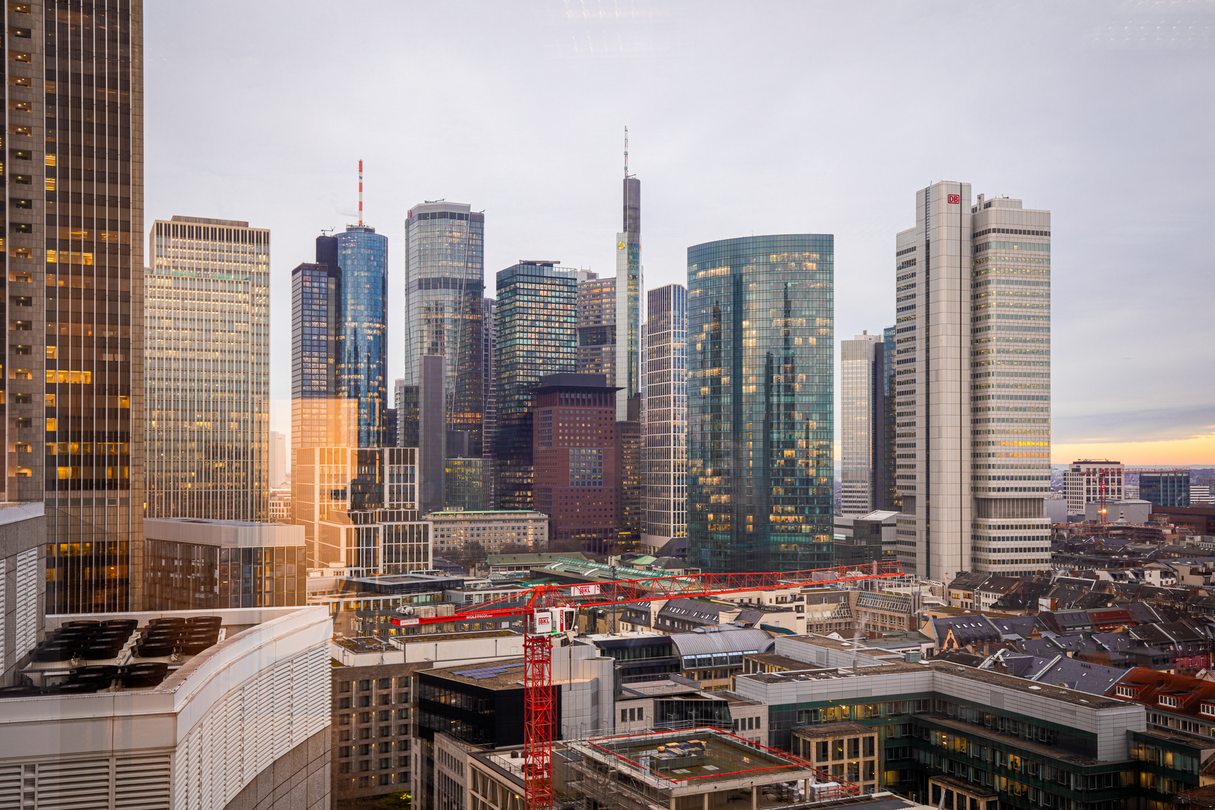
The Westend Tower, DZ Bank's headquarters in Frankfurt: an architectural landmark and well-maintained property in a prime location. However, after more than three decades of use, the lighting on the office floors was technically outdated. RIDI took on the lighting refurbishment, providing tailor-made refurbishment solutions and meticulous logistics.
Lighting refurbishments in existing buildings conserve resources and reduce energy consumption. They are also a highly topical issue in view of the phasing out of many conventional lamp types. RIDI offers comprehensive solutions for this. The spectrum ranges from component replacement and refurbishment of existing luminaires to complete redesign after component removal. Another typical refurbishment task is the 1:1 replacement of outdated luminaires while retaining the original ceiling openings. This cannot always be achieved with standard products – as was the case at the DZ Bank locations in Frankfurt.
Goodbye fluorescent, hello LED
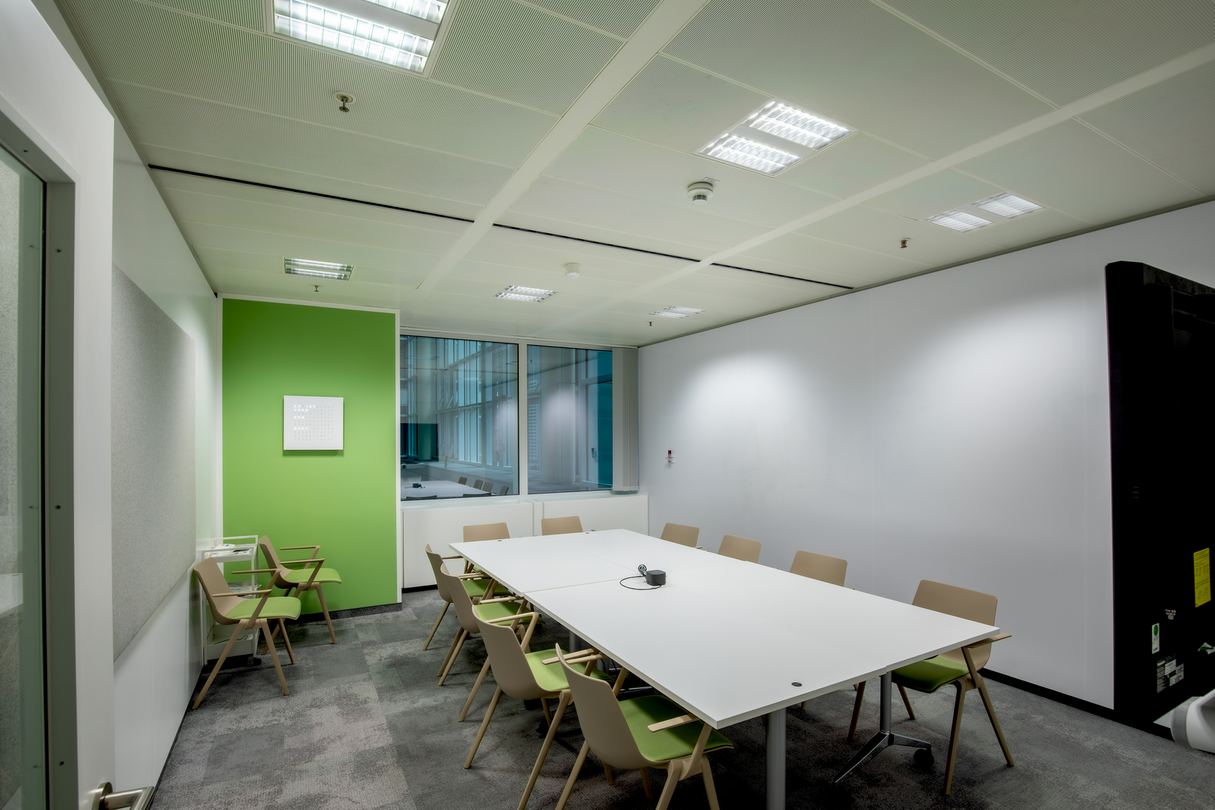
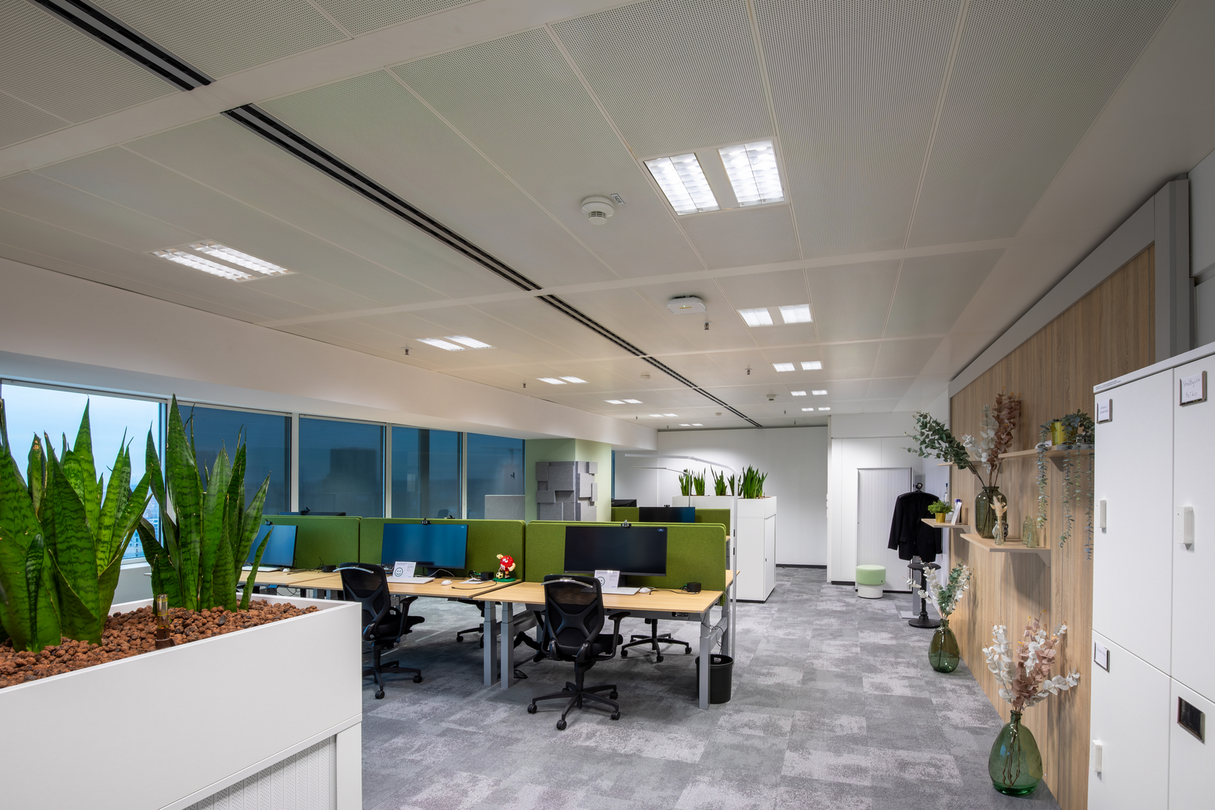
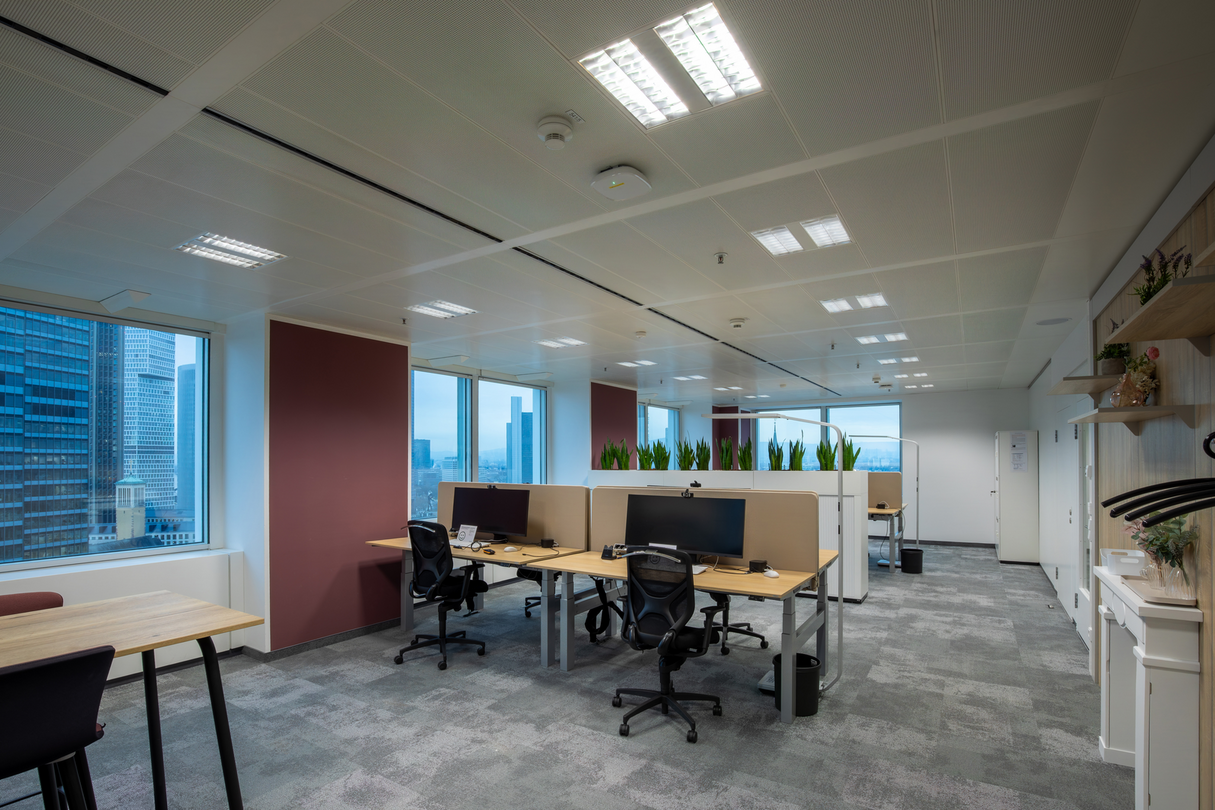
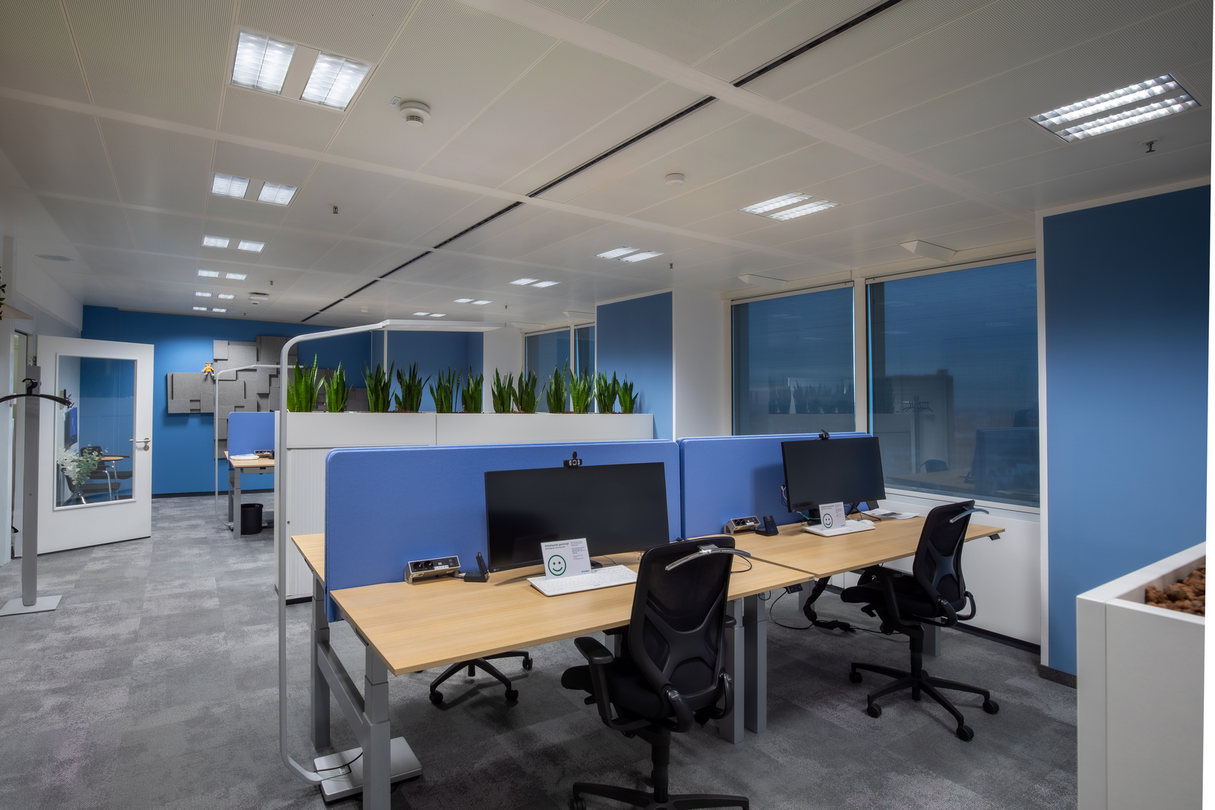
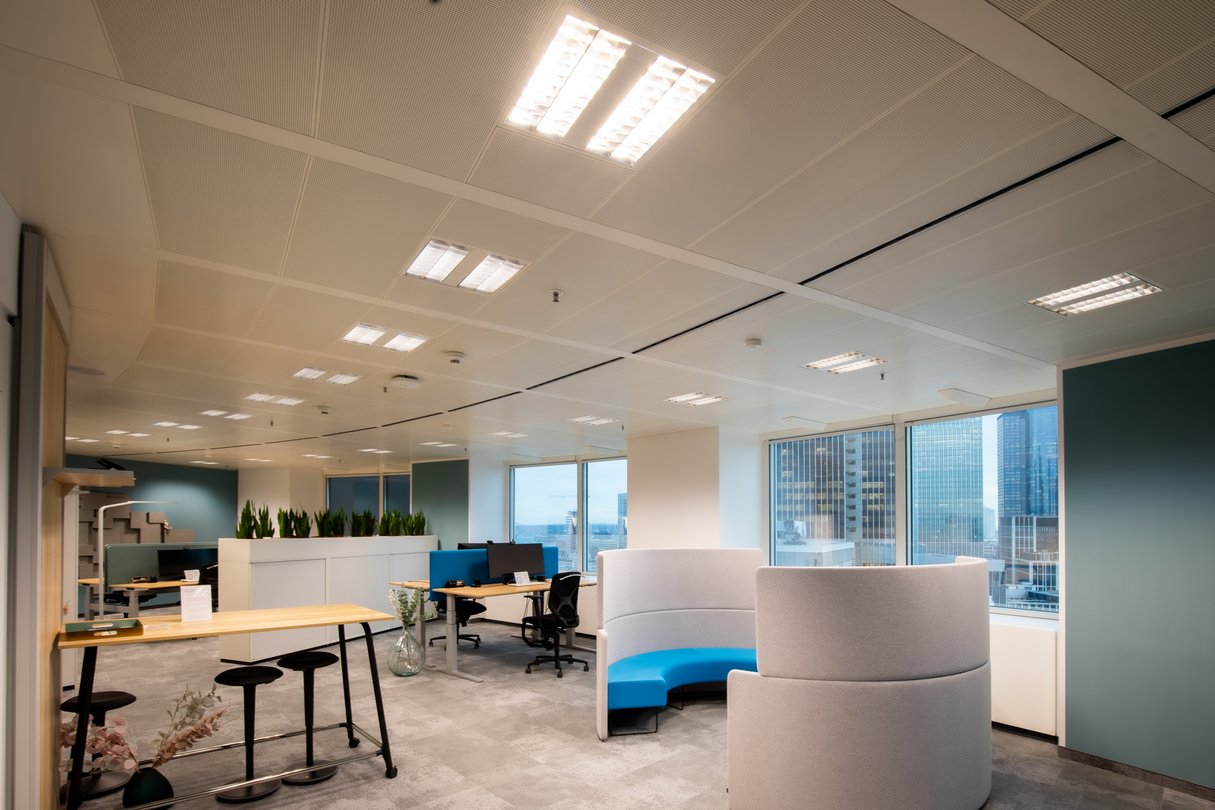
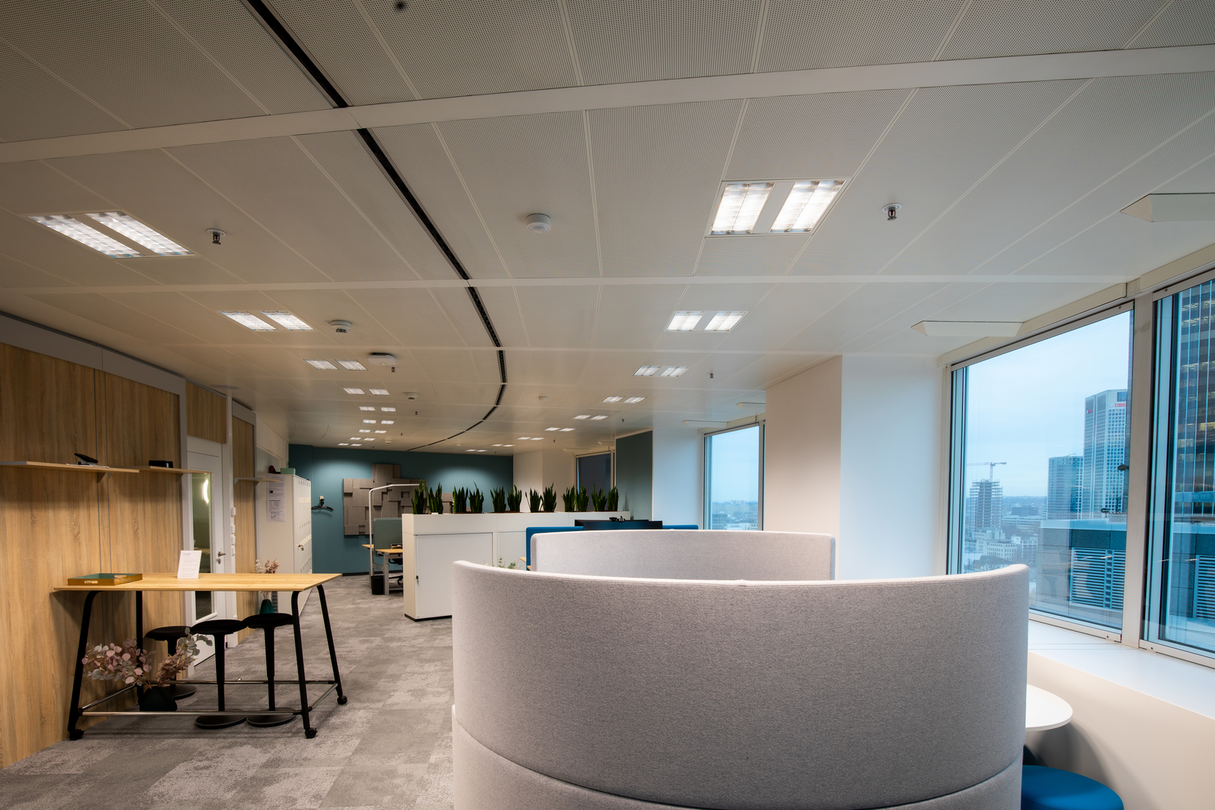
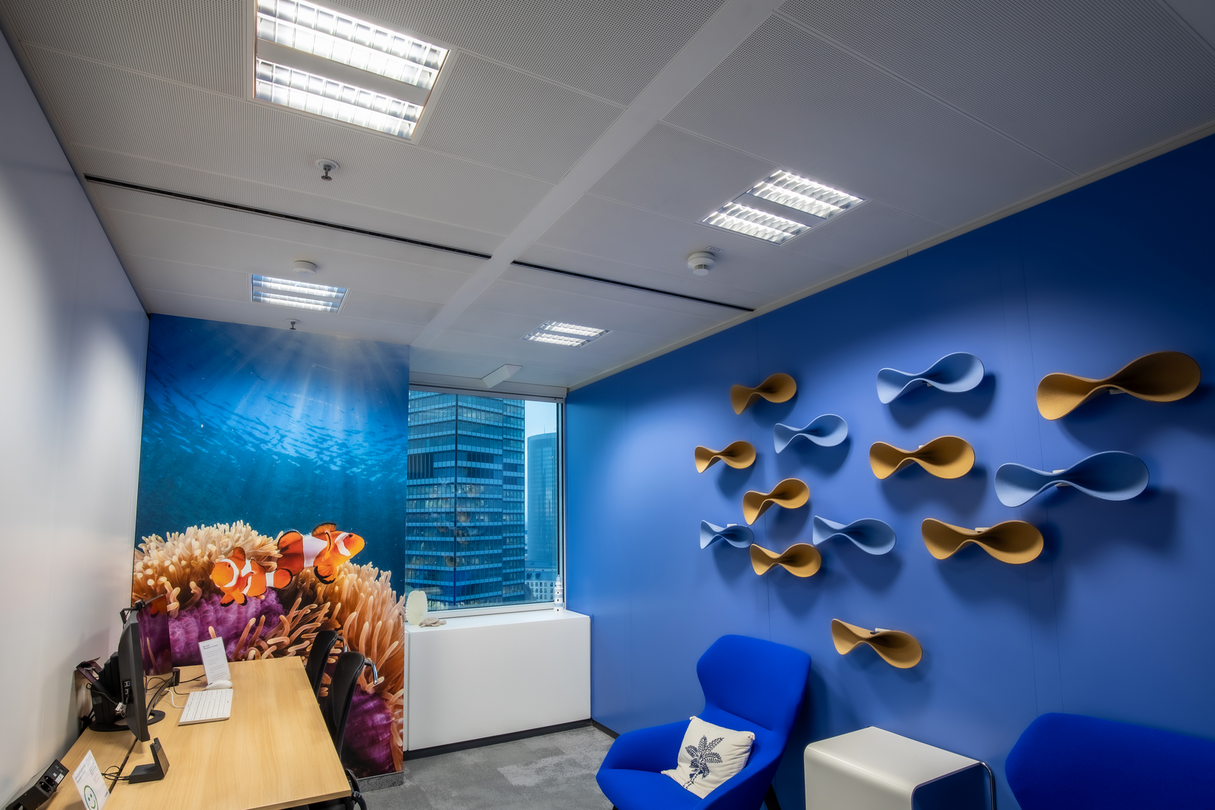
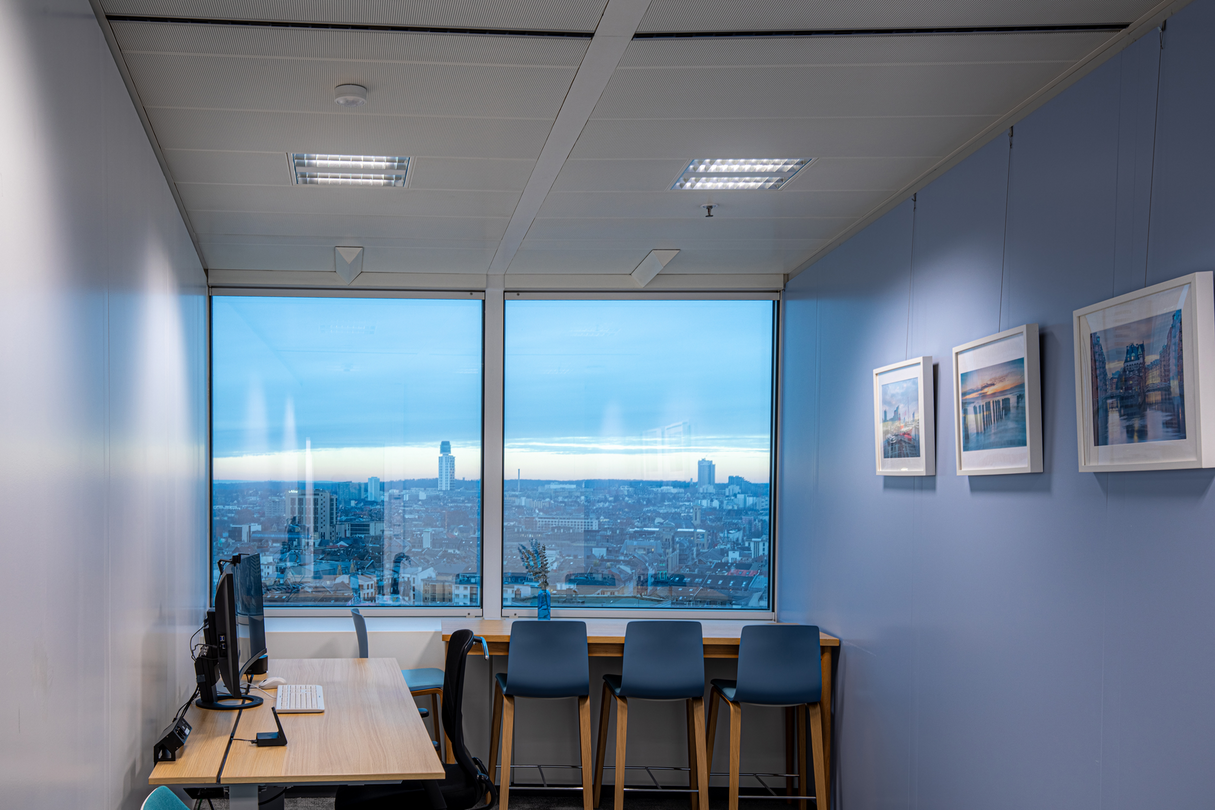
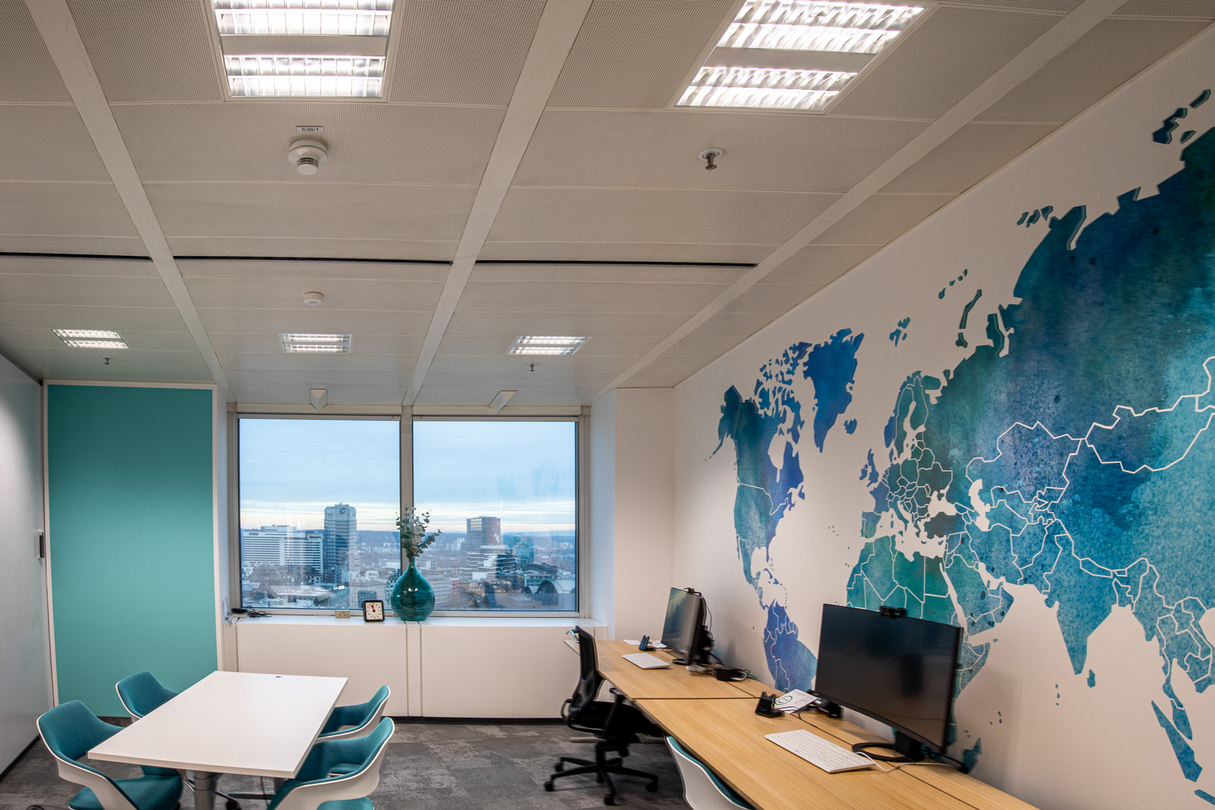
Here, DZ Bank’s facility management team planned a comprehensive renovation of several buildings, including the 208-metre-high Westend Tower with its striking crown and City House 1. The renovation involved changing the office layout to open-plan spaces, desk sharing and hybrid working, designed with the involvement of employees. In addition, a total of around 17,000 luminaires were replaced, mainly two basic types: square recessed luminaires in the metal ceiling system and rectangular linear luminaires. They dated from the construction period in the early 1990s and still used fluorescent lamps that are no longer commercially available. The client’s explicit requirement was that the existing ceiling systems and light point positions should be retained. This left no room for manoeuvre in the planning. The new lighting technology had to fit 1:1 into the existing mounting openings and at the same time comply with all applicable standards, from illuminance and uniformity to glare limitation at computer workstations.
"There is no grandfather clause – when retrofitting, the current rules must be complied with," says Benno Zimmer, Head of Project Business and International Sales at RIDI Leuchten GmbH, describing the challenge. High-precision optical control was therefore crucial. During on-site sampling, RIDI presented customised LED luminaires that, like their conventional predecessors, use a satin-finish aluminium mirror louvre to combine wide beam, uniform light with high ability to reduce glare. "Our solution also prevailed in user comparisons against lens or microprismatic systems," reports the expert.
Just-in-time lighting logistics for luminaires
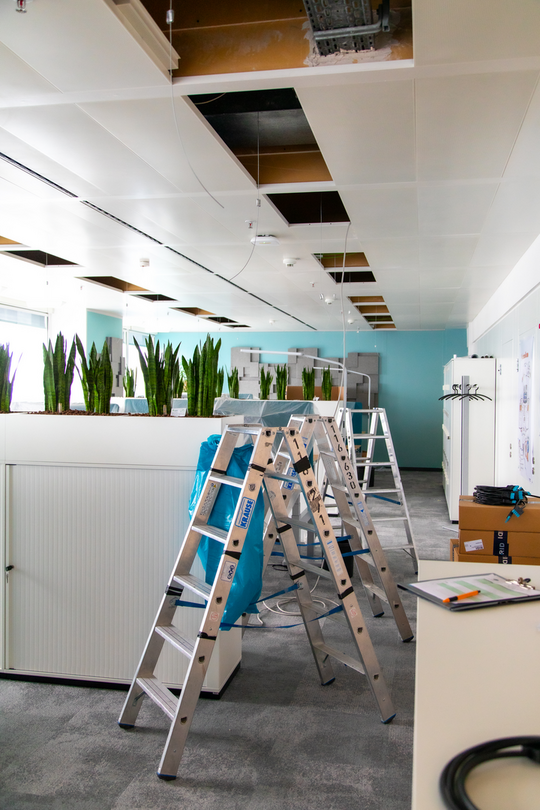
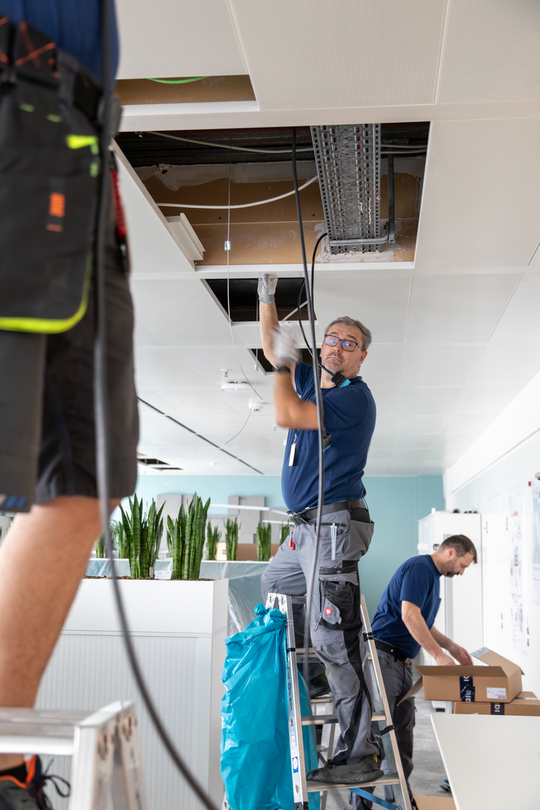
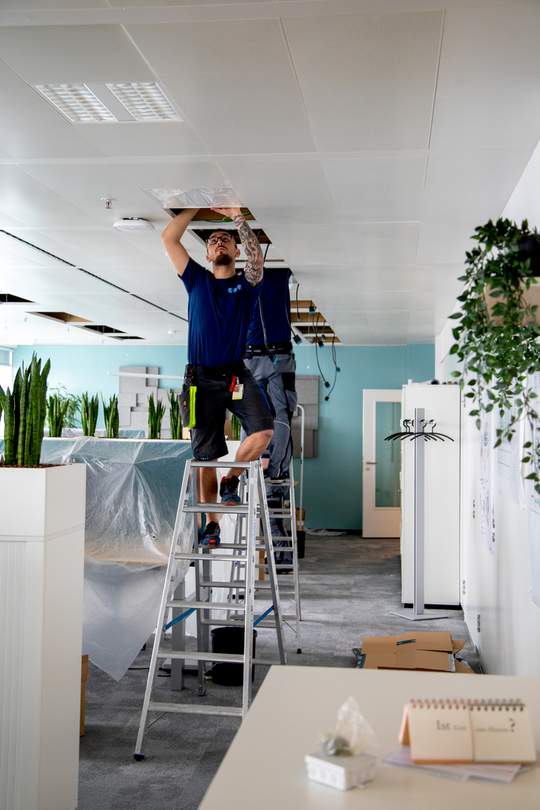
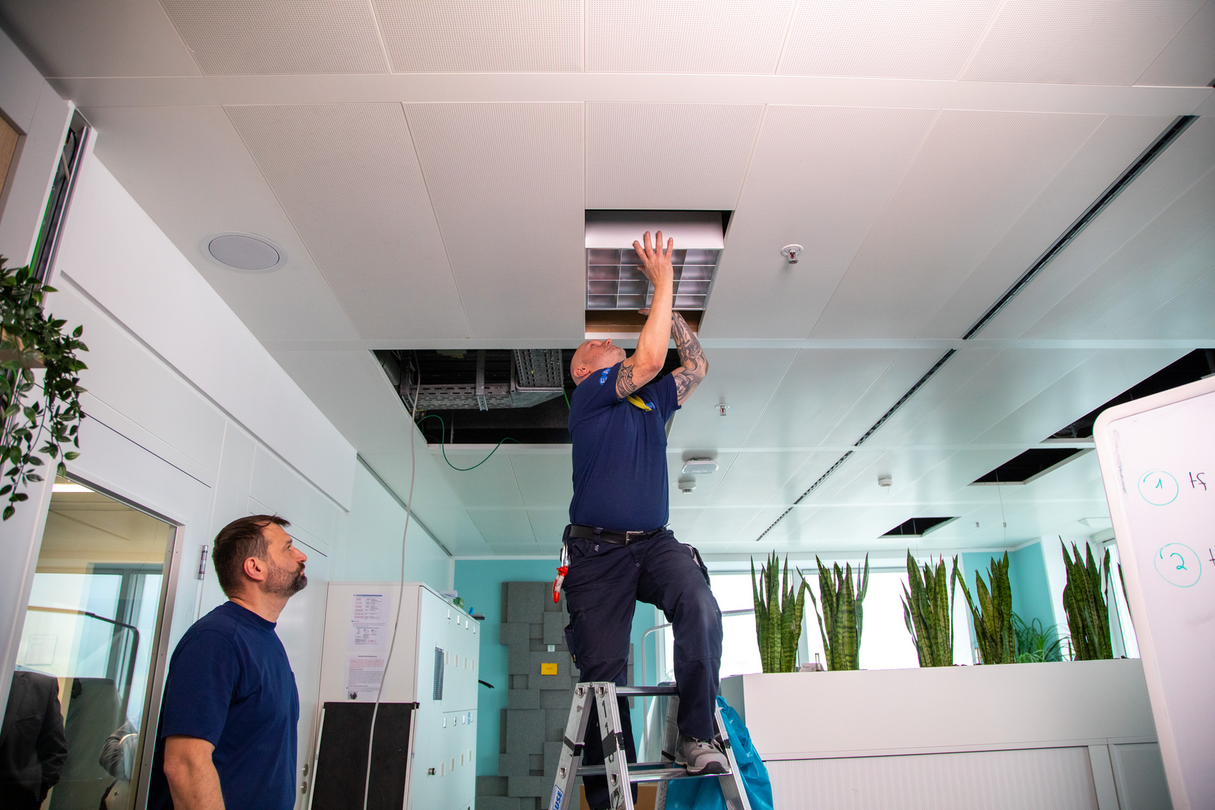
At the same time, the renovation placed enormous demands on logistics and timing. The work was carried out floor by floor while the building remained in operation. Employees temporarily moved to alternative premises, and deliveries had to be made just in time. RIDI organised the entire delivery with its own fleet of lorries, some of them 40-tonners, directly to Frankfurt city centre. Up to 20 pallets of luminaires were delivered per construction phase and installed immediately. To further reduce installation times, RIDI delivered the luminaires pre-assembled with cables and connectors. On site, the fitters were able to simply insert and connect the luminaires and cables – a decisive factor for the tight schedule.
Technically, the new lighting is future-proof. RIDI has equipped the luminaires with the latest, highly efficient LED modules with a colour temperature of 4000 K in Zhaga standard formats. This meets the building owners' requirement to be able to replace components with manufacturer-neutral alternatives if necessary. Dimmable DALI electrical components integrate the luminaires into the building management system and also provide a "constant light output" function: this means that the power supply to the LEDs is automatically adjusted over the years to compensate for ageing effects and maintain a constant illuminance level. Sensors also control the illuminance level in each room depending on the amount of daylight.
Focus: life cycle costs
In addition to optimal light quality, the aim of the lighting refurbishment in the DZ Bank offices was to achieve the longest possible system service life with minimal maintenance, because from the operator's point of view, life cycle costs play a central role alongside investment costs. "High-quality LEDs and electrical components with a service life of up to 100,000 hours are significantly more economical in the long term than supposedly inexpensive solutions," emphasises Zimmer: "Fewer failures, less maintenance, lower energy costs."
Interestingly, many users hardly noticed the change in lighting. Thanks to the familiar appearance and lighting characteristics of the RIDI solution with mirror louvres, employees do not perceive the new lighting as a "break" – a conscious goal of the project. "People are creatures of habit," says Zimmer: "If the lighting is just right, the technology behind it goes completely unnoticed." For him, it is clear that modern lighting today is inextricably linked to control, energy efficiency and user comfort. Certification systems such as DGNB or BREEAM are gaining in importance in the real estate industry. They now effectively require intelligent lighting solutions – as a lever for primary energy savings and well-being in equal measure.
Place
Frankfurt
Year of construction
Subject area
Office & Conference