







Theodor-Heuss-Realschule, Leverkusen
Project description
Renovation potential, optimally utilised: The Theodor Heuss Secondary School in a new light from RIDI
A school is being renovated and expanded – that sounds like good news. In the case of the Theodor-Heuss-Realschule in Leverkusen-Opladen, however, there is a dramatic background to this: the building, which only opened in 2003, suffered severe flood damage during a storm in 2021. The city of Leverkusen seized the opportunity to bring all of the lighting up to the latest standards in terms of ergonomics and energy efficiency.
When the school reopens in April 2025, the building will truly look "like new" – a compliment to the timeless modern design by the Stuttgart-based firm Wulf Architekten, with its balanced proportions and generous glass surfaces. From the outside, only the addition of another storey to the left wing of the building hints at the extensive renovation work that has taken place: not only did the structure of the basement and ground floor, which had been damaged by flooding in 2021, have to be replaced, but the planners also relocated all the building services to higher floors for flood protection reasons. As modern as the school building appears, a lot has changed in terms of technical equipment over the last two decades. A photovoltaic system on the roof, a KNX electrical installation and, last but not least, energy-saving LED lighting now enables a significantly more sustainable operation.
Patrick Poßberg still remembers how bad the flood damage was. He heads up the electrical engineering department in the building management division at the City of Leverkusen and recalls: "The basement was flooded up to the ceiling, and all the control centres, main distribution boards and luminaires there were completely destroyed. The ground floor was under 1.5 metres of water, and the ceilings with the lighting were exposed to severe moisture." In addition, the existing lighting still used mercury-containing fluorescent tubes and compact fluorescent lamps, i.e. obsolete lamps that are currently disappearing from the market. The city therefore decided to completely renew the lighting.
Logistics – like clockwork
Thanks to reconstruction funding following the flood disaster, sufficient funds were available for the renovation, but the schedule was tight, reports the electrical engineer: "After the flood, we had to relocate the school. Time was pressing, and there was little scope for a long planning phase, as is usual with conventional projects." Against the backdrop of using the existing stock as economically as possible, a partner with expertise in lighting refurbishment was needed. The task was to plan and tailor the new lighting to the existing mounting points and ceiling cut-outs. This is where RIDI came into play, thanks in part to the active presence of sales representative Dietmar Neu on site. "Together with the specialist planners involved, RIDI quickly contributed a coherent and suitable lighting concept," praises Poßberg – and the logistics also ran like clockwork, with a total of around 850 luminaires arriving at the construction site at short notice and on time.
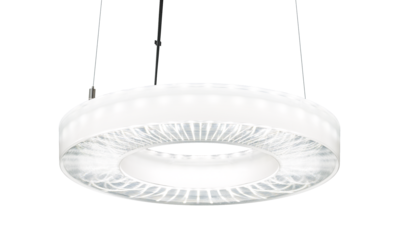
"The Theodor Heuss Secondary School now uses state-of-the-art, ergonomic and energy-efficient LED lighting technology," explains Dietmar Neu, who coordinated the project at RIDI. Replacing the TFL recessed luminaires that previously illuminated the traffic routes and corridors was straightforward: 250 LED recessed downlighters from RIDI's EDLR-E2 series now operate in the same ceiling openings. They have a luminous flux of around 3,000 lumens with LEDs in light colour 840 (4000 Kelvin / neutral white) and are equipped with DALI drivers. And for the glass pendant luminaires, which previously provided both lighting and design accents in the foyer, a more than adequate replacement was found in the form of the expressive IRIS. Each of these luminaires with their torus-shaped, translucent housing emits up to 11,000 lumens of direct-indirect beam – also in light colour 840 and dimmable via DALI: an attractive eye-catcher for the foyer and stairwell, visible from afar through the generous glass façade.
Focus on ergonomics
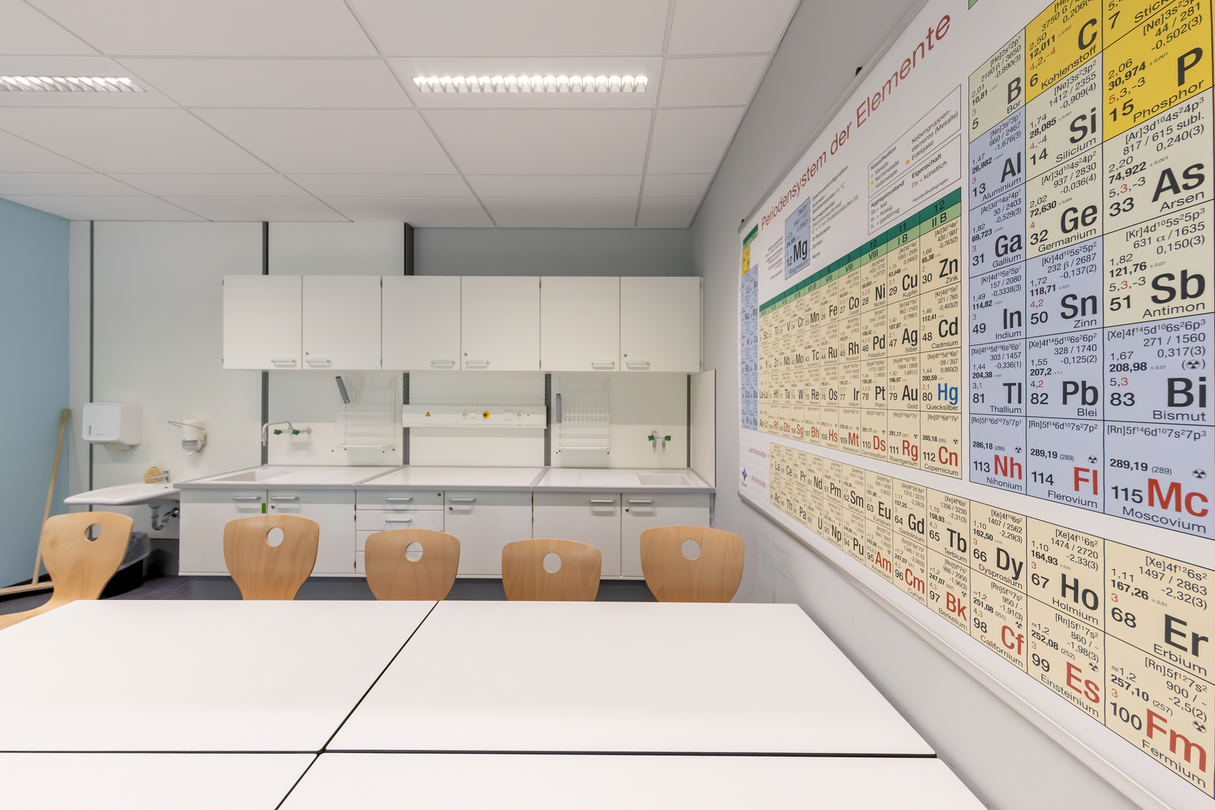
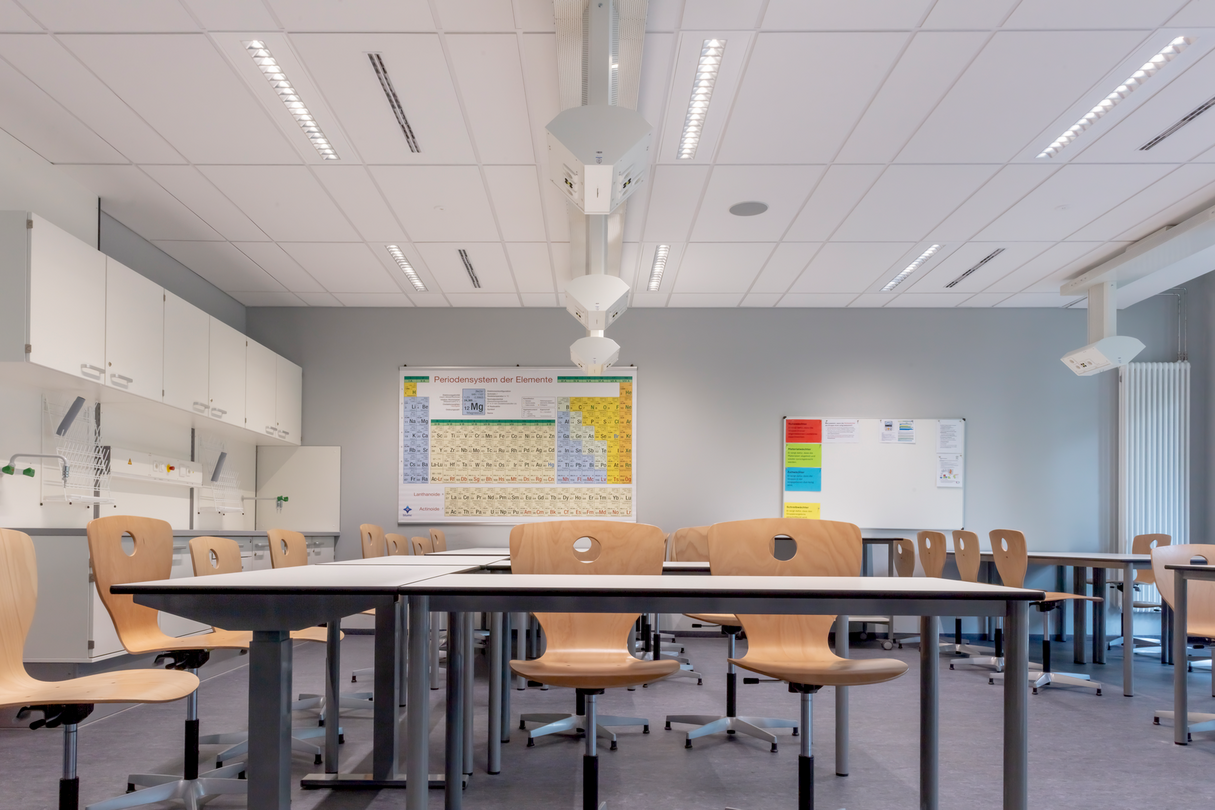
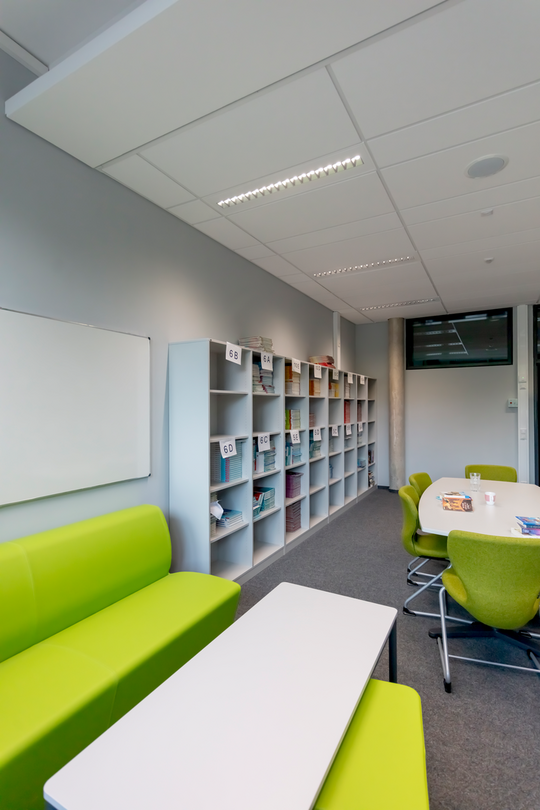
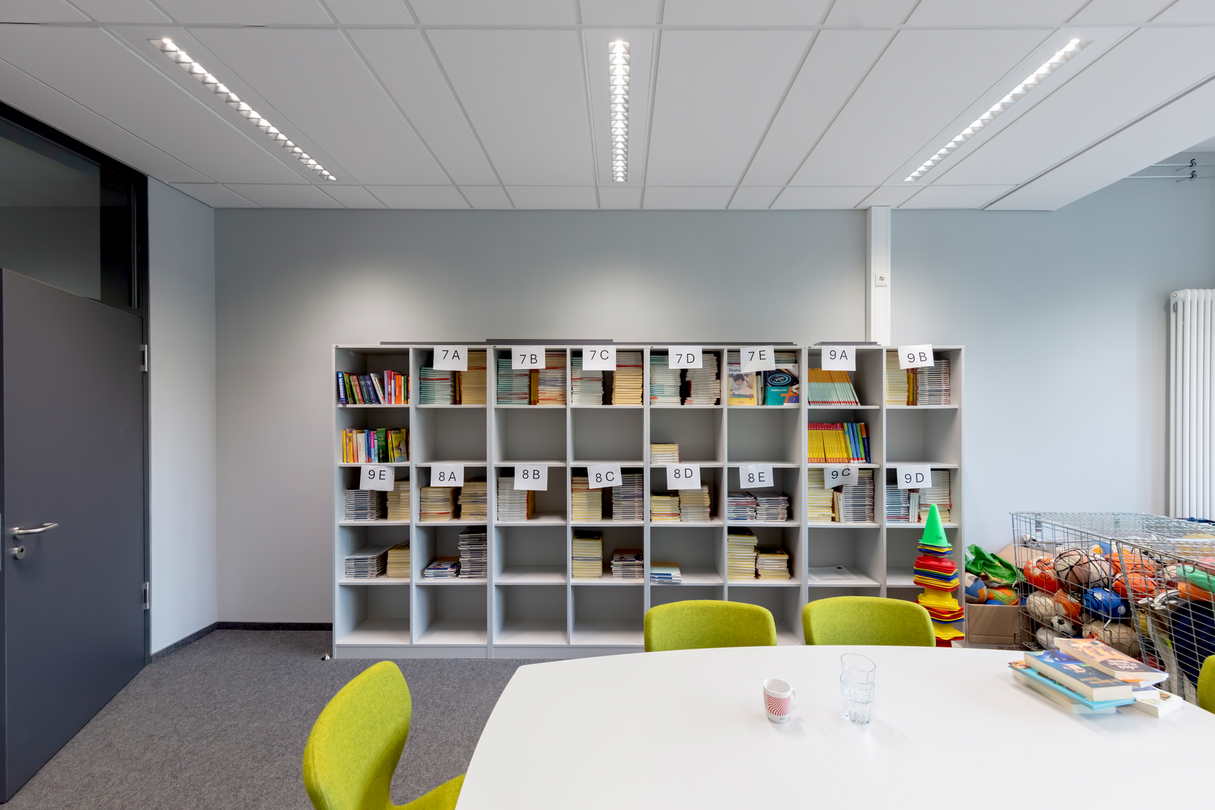
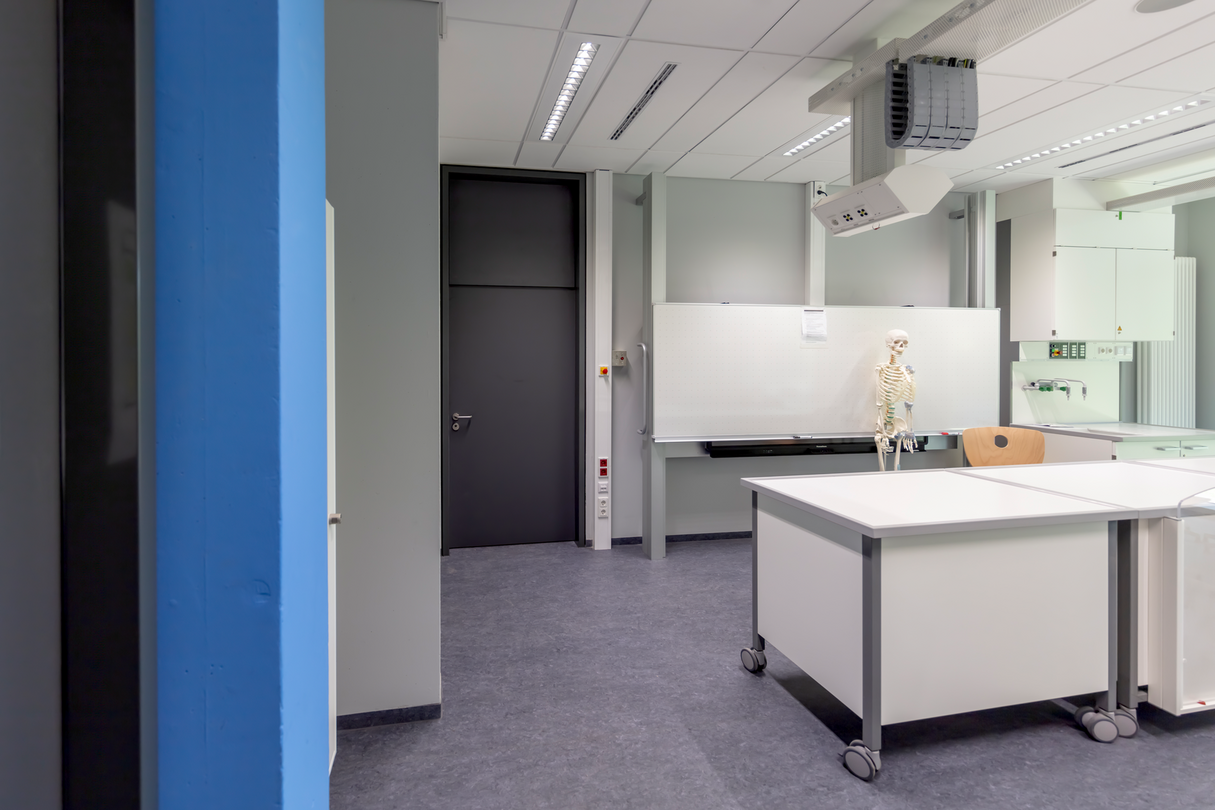
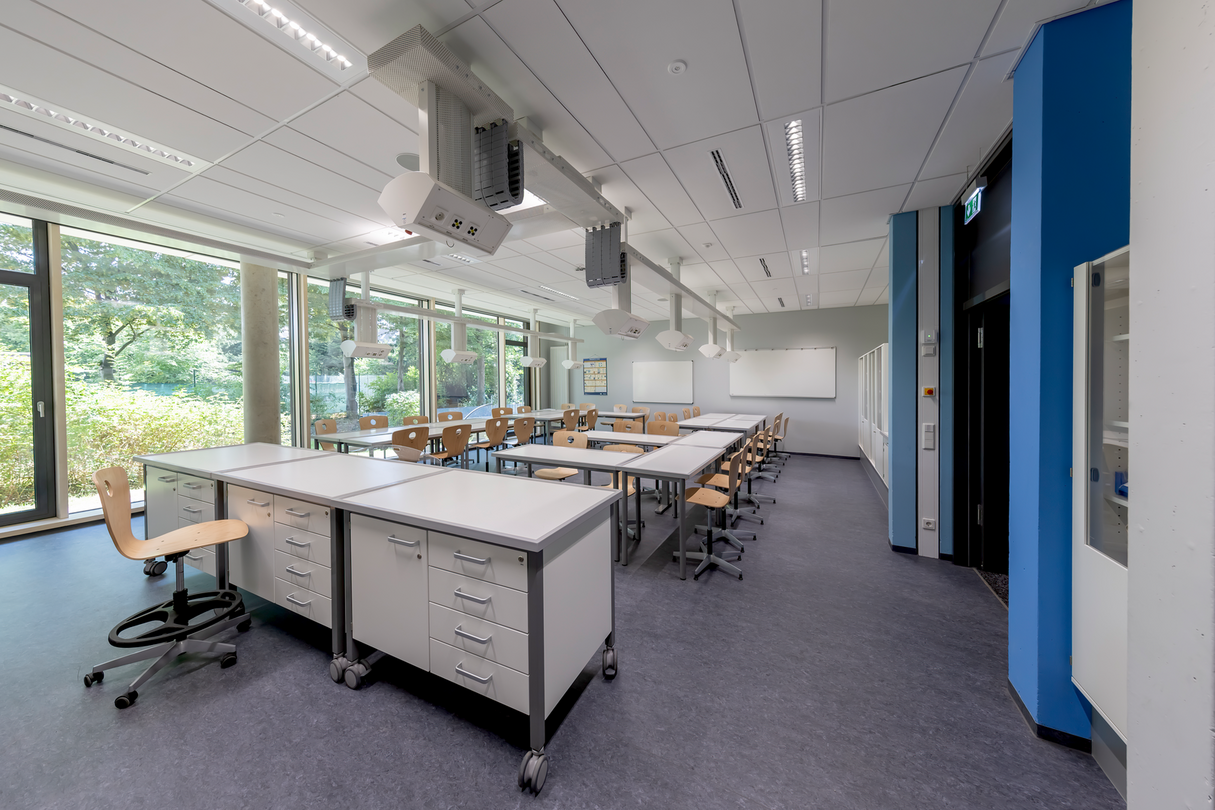
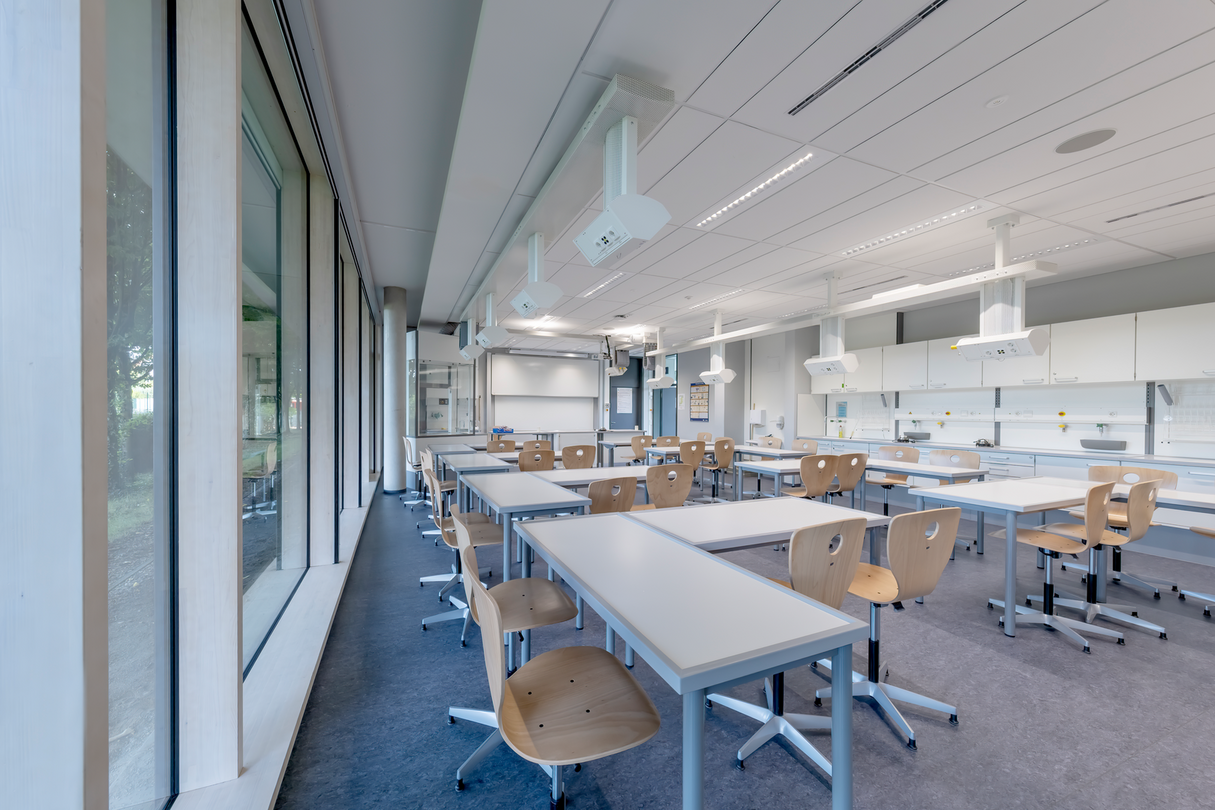
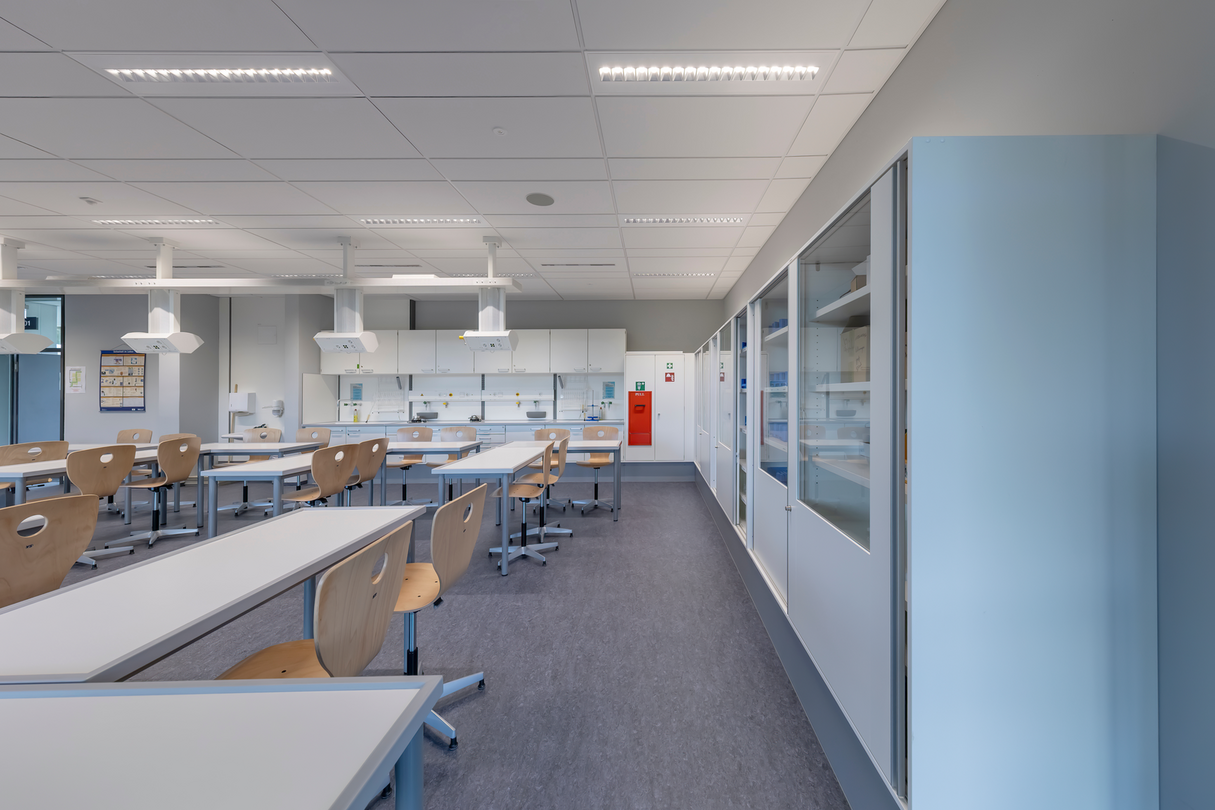
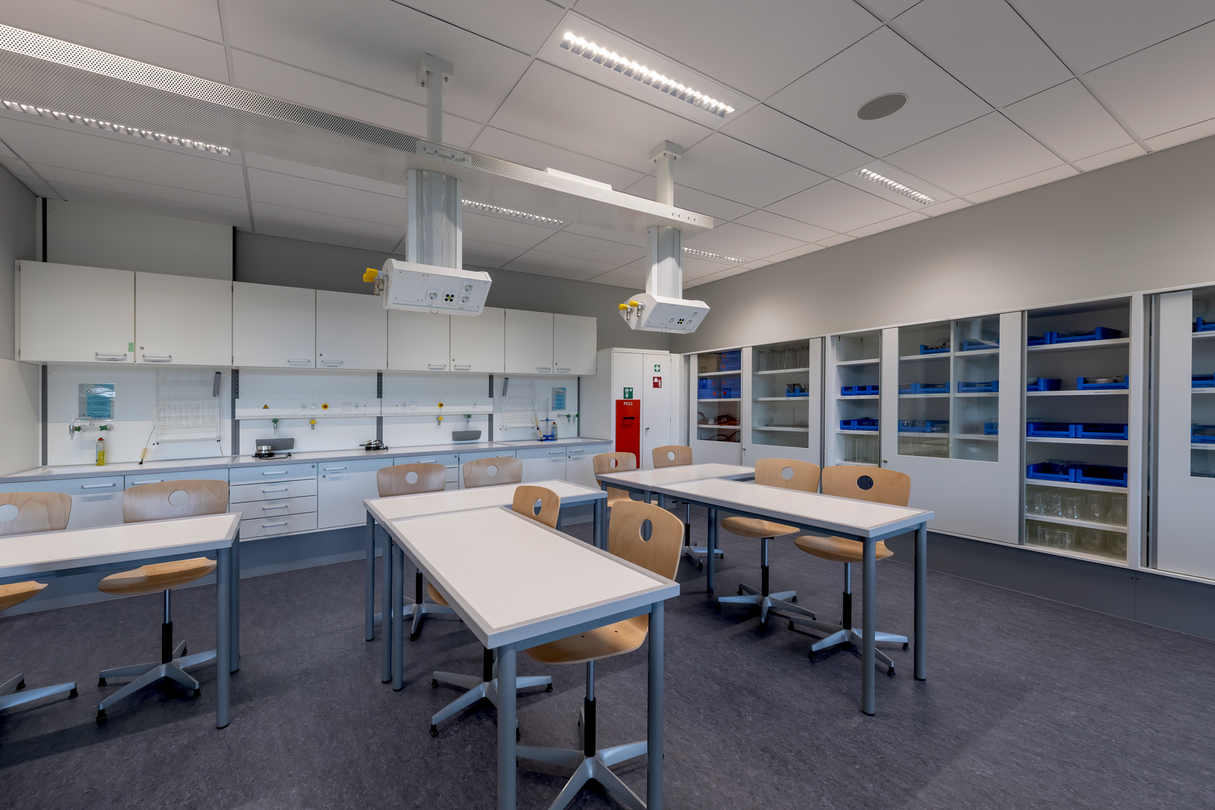
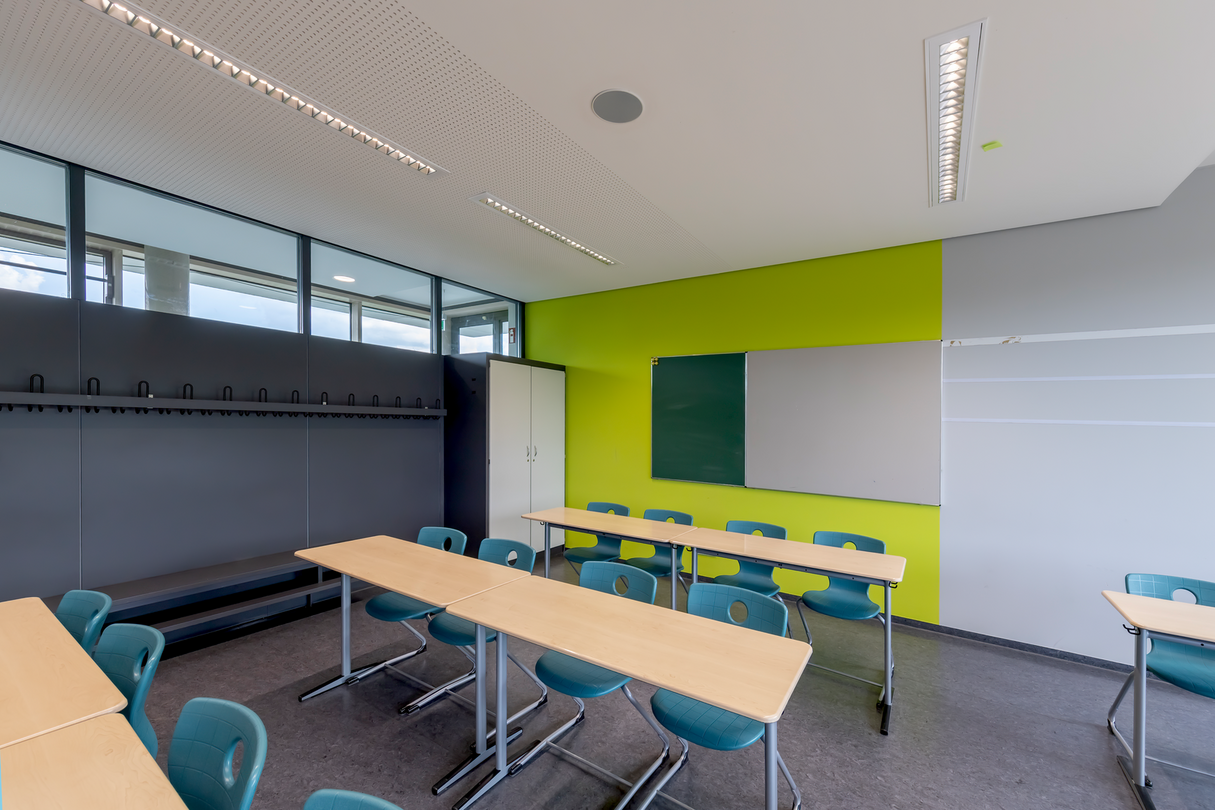
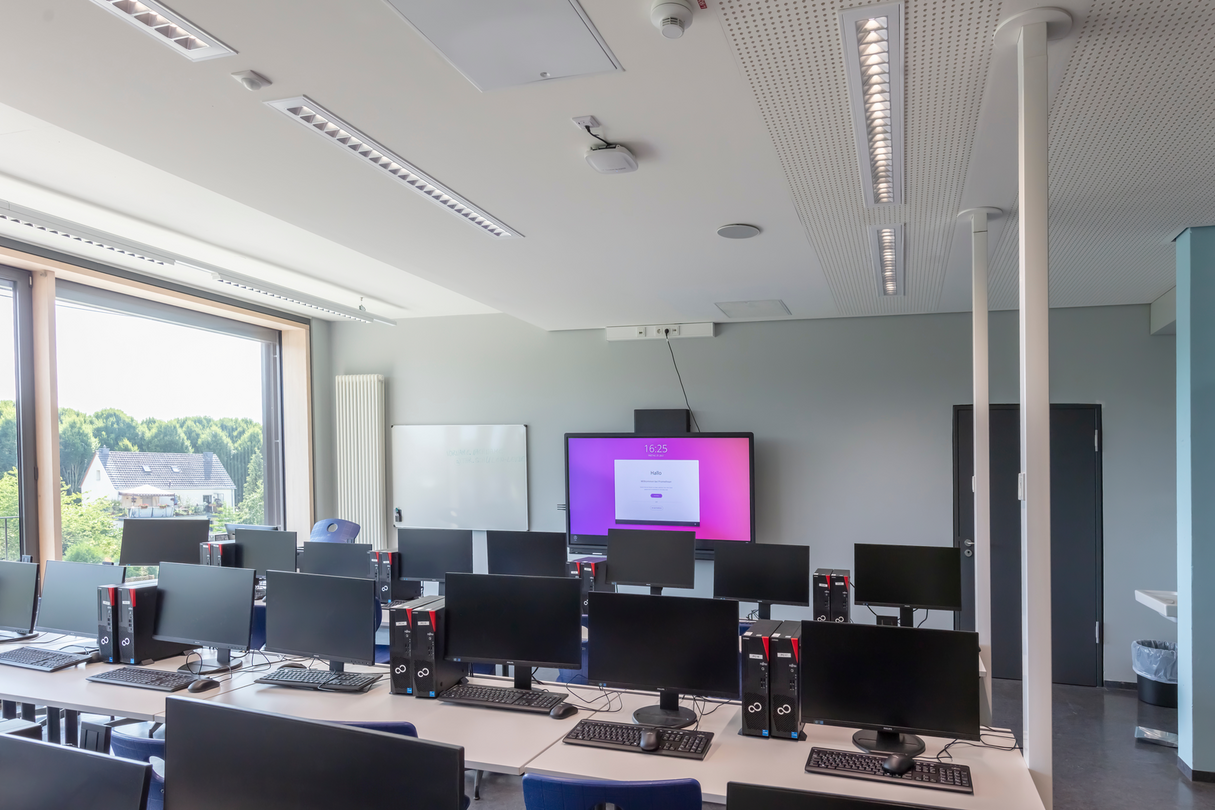
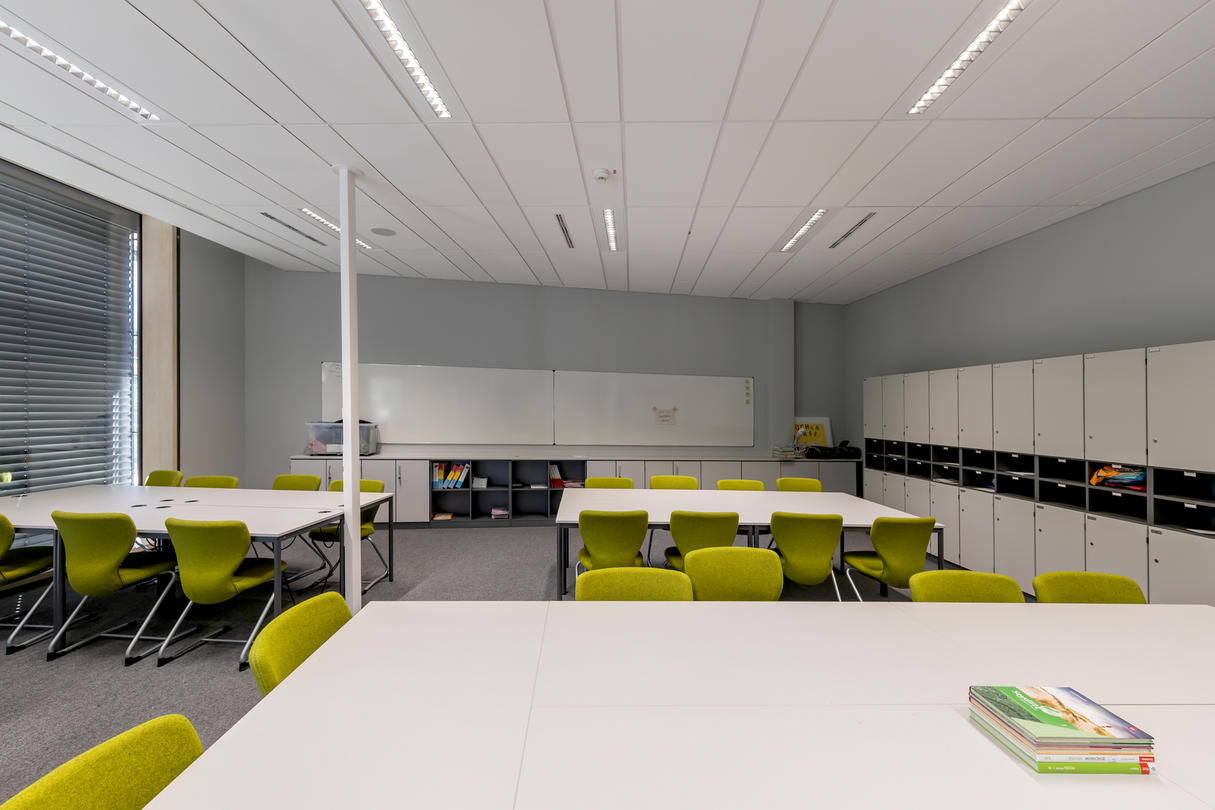
When it came to lighting the classrooms and specialist rooms, the main priorities were light quality, ergonomics and functionality. RIDI won over the building owners with its "Multilens" technology, which uses multiple lenses for optical control. These lenses are recessed into chambers made of satin-finish aluminium, which ensure a high cut-off and thus glare protection and visual comfort. As the ceilings in the classrooms are not suspended down to the window front, this lighting technology is used both in the form of XEL-EE recessed luminaires from the Multilens series and as a continuous row of luminaires from the RIDI LINIA series, "tailored to the different visual tasks in classrooms and laboratories with different outputs in order to achieve illuminance levels of 500 lux and 750 lux respectively," explains Dietmar Neu: "But always with excellent uniformity and screen-compatible RUG ≤ 19".
Digital connectivity is just as much a feature of the new lighting system as light quality. With the exception of the auditorium – where the recessed downlights from the EDLR-E2 series have been designed as non-standard versions with DMX drivers to integrate them into the stage technology – all RIDI luminaires in the Theodor Heuss Secondary School have DALI drivers and are fully integrated into the building control system via DALI-KNX gateways. "Building automation plays an important role in energy efficiency, which is why we in the city of Leverkusen have been using the KNX bus as standard for some time now," says Poßberg. In terms of lighting, KNX takes care of daylight-dependent control of illuminance and presence switching – semi-automatically in classrooms and completely without switching points in traffic zones.
Light creates well-being
Patrick Poßberg has a clear idea of what good lighting for a school should look like: "For me, in addition to energy efficiency and normative requirements, homogenous illumination is particularly important," says the expert. "Added to this is a pleasant overall lighting design that is tailored to the architecture and its elements." However, as schools are also heavily used functional buildings, durability and ease of maintenance and repair are also important to Poßberg. He sums up by saying that all of this has been successfully implemented at the Theodor Heuss Secondary School: "The lighting appears very uniform without the luminaire bodies being too dominant. We were able to limit the number of light points to the necessary minimum. So far, we have received only positive feedback from users, primarily teachers."
There's no question about it: good lighting in educational institutions promotes concentration and well-being among teachers and pupils and creates a pleasant learning environment. This creates added value for users and society. This school in Leverkusen is a shining example of how renovation pressure, energy efficiency and good lighting quality can be successfully combined, even under extreme conditions.
Photos: Frieder Blickle / RIDI
Place
Leverkusen
Year of construction
Subject area
Education & Culture
RIDI products used